

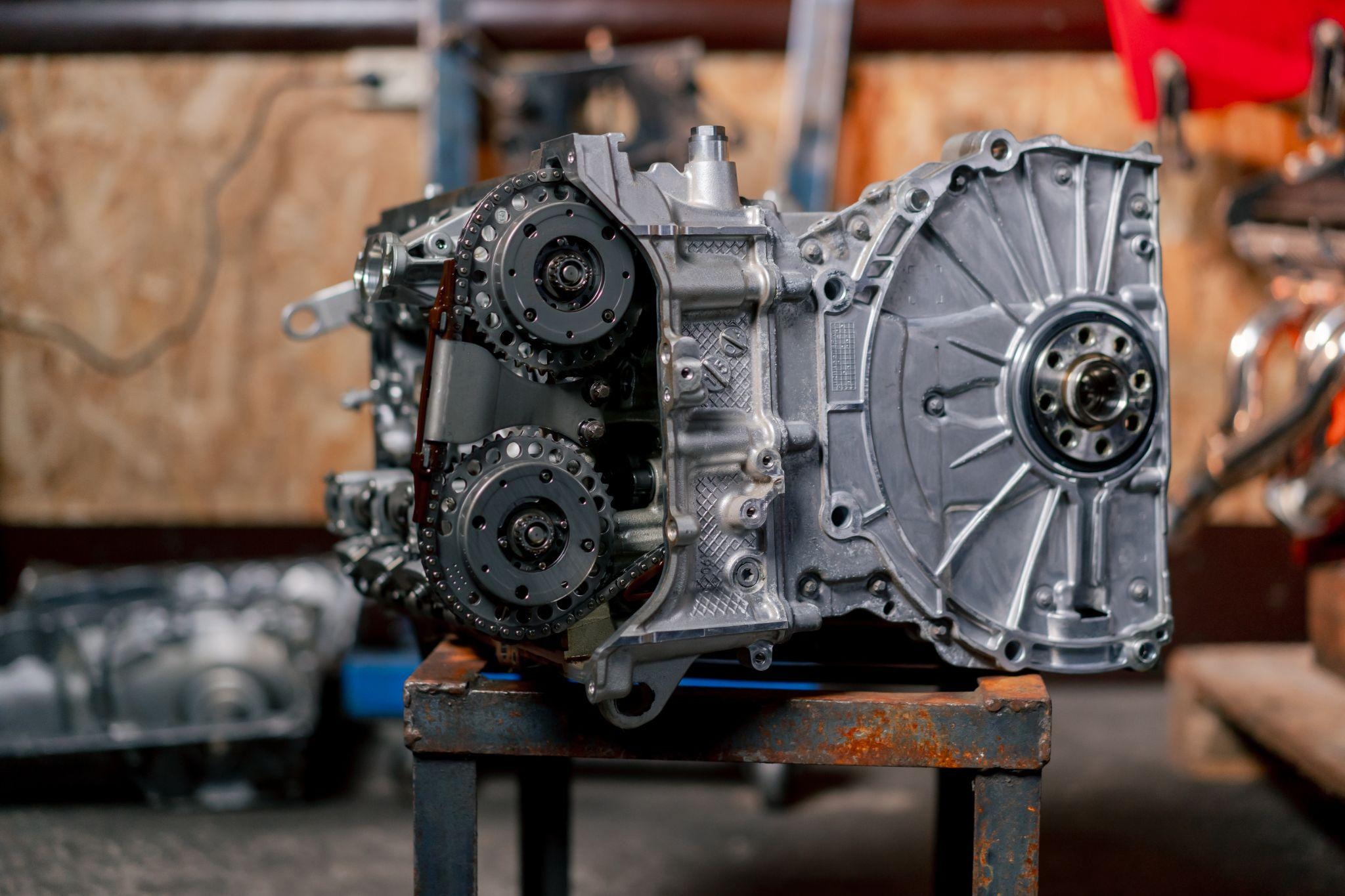
Acura has a transmission problem. Not a small one. The brand that Honda built to compete with Lexus and BMW in the premium segment has been quietly battling automatic transmission failures across multiple platforms for over two decades. If you own a 2001-2006 MDX, a 2004-2008 TL, or a 1999-2004 RL, there’s a meaningful chance you’ve already experienced the issue or will before you reach 150,000 miles.
The failure isn’t random. The root cause is well-documented by engineers and transmission specialists. And once you understand what’s actually happening inside the gearbox, the repair options become clearer.
What’s actually failing inside these transmissions?
The short answer is the third-gear clutch pack. The longer answer involves Honda’s decision to use a specific friction material that breaks down under heat faster than the transmission fluid can dissipate it. The result is a progressive failure that starts with a harsh 2-3 shift, evolves into a flare (where the engine revs up momentarily before the gear engages), and eventually becomes a complete loss of third gear engagement.
Honda engineers designed these transmissions, specifically the BYBA, BAYA, and BGFA units used across various Acura models, with clutch pack capacity that’s adequate for normal driving but marginal for the torque loads the V6 engines produce. The J32A and J35A V6 engines make 260 to 300 lb-ft of torque, and the transmission’s thermal management wasn’t designed with enough margin for aggressive driving, towing, or even sustained highway cruising in hot climates.
The transmission fluid temperature is the critical variable. Above 220°F, the friction material degradation accelerates exponentially. In stop-and-go traffic in Houston or Phoenix, transmission temperatures routinely exceed that threshold. An auxiliary transmission cooler could have prevented the issue in most cases, but Honda didn’t include one as standard equipment on these models.
Is a rebuild the right move?
For some owners, yes. A transmission specialist who understands the Honda/Acura failure mode can rebuild the unit with upgraded friction materials, a revised clutch pack, and an improved valve body calibration. Shops like Luzerne Transmission and Level 10 Transmissions have developed specific rebuild protocols for these units that address the original design shortcomings. Costs range from $2,500 to $4,000 depending on the extent of damage and the shop’s geographic location.
The rebuild path makes sense when the rest of the vehicle is in excellent condition and the owner plans to keep it long-term. A properly rebuilt unit with upgraded internals can outlast the original by a significant margin, especially if an auxiliary cooler is added during the repair.
But rebuilds take time. Two to three weeks is standard for a quality transmission rebuild. During that period, the owner needs alternative transportation. For a vehicle that serves as a primary daily driver, the downtime alone can tip the decision toward a faster alternative.
Where does a JDM replacement fit in?
Japanese-market Acura vehicles (sold as Honda in Japan) used the same transmission platforms but often saw gentler duty cycles. A Honda Legend (the Japanese-market MDX equivalent) driven on congested but relatively flat urban roads in Yokohama puts less thermal stress on the transmission than an MDX towing a trailer through the Texas Hill Country.
Sourcing a low-mileage JDM transmission means getting a unit with the same design, but with significantly less wear on the clutch packs. Importers who specialize in Honda and Acura platforms, including those offering Acura JDM transmission options, stock these units with verified mileage under 60,000 miles. At $800 to $1,500 for the transmission, plus $1,000 to $1,800 in shop labor for the swap, the total cost undercuts a full rebuild while getting the car back on the road within days instead of weeks.
The trade-off is clear: a JDM replacement gives you a fresh version of the same design. It hasn’t been upgraded. The third-gear clutch pack is original, and the thermal management is identical to what failed in your vehicle. This means the replacement unit will eventually encounter the same stress factors if the driving conditions don’t change.
Can you extend the life of the replacement?
Yes, substantially. Three modifications dramatically improve the survival rate of these transmissions, whether rebuilt or replaced with a JDM unit.
First, install an external transmission cooler. A Hayden or Derale unit mounted in front of the A/C condenser reduces fluid temperatures by 30 to 50 degrees during normal driving. This single modification addresses the root cause of the failure directly. The parts cost $150 to $300 and the installation takes two to three hours.
Second, change the transmission fluid every 30,000 miles instead of the factory-recommended 60,000 or the often-quoted “lifetime fluid” interval. Use Honda DW-1 ATF specifically. Aftermarket fluids, even high-quality ones from Valvoline or Castrol, don’t match the friction coefficient the clutch packs require. This isn’t brand snobbery. It’s a measurable engineering specification.
Third, avoid towing with these vehicles unless absolutely necessary. The transmission was not designed with towing capacity as a priority, despite the MDX and TL being marketed as versatile vehicles. If towing is unavoidable, keep loads under 2,000 pounds and monitor transmission temperature with an aftermarket gauge.
The bigger picture for Acura owners
Honda corrected many of these issues in later transmission generations. The 2010-and-newer MDX uses a revised transmission with better thermal management and more durable clutch materials. The TLX moved to a different architecture entirely. The ZF-sourced 9-speed in the latest models is a completely different animal, though it brought its own set of early teething problems that have since been addressed through software updates.
But the 2001-2008 vehicles remain on the road in large numbers, and their owners face this decision regularly. The Acura TL from that era, in particular, remains one of the best-driving front-wheel-drive sedans ever produced. The interior quality, the ride balance, the J32A3 engine’s willingness to rev: these cars earned loyal followings for reasons that have nothing to do with their transmissions. Owners keep them running because the car itself is worth saving.
That emotional attachment is valid, but it shouldn’t override financial logic. A $12,000 car doesn’t justify a $5,000 repair unless the owner intends to drive it for at least four more years. A $2,500 JDM swap with an auxiliary cooler installation brings the total cost down to a level where the math works for most owners who plan to keep the vehicle through the medium term.
Understanding the root cause transforms the conversation from “my transmission died, what now?” to a deliberate choice between rebuild, replace, or upgrade. Each path has a cost, a timeline, and a set of outcomes that can be evaluated rationally. The worst option is the one taken in panic without understanding why the failure happened in the first place.
Leave a Reply